
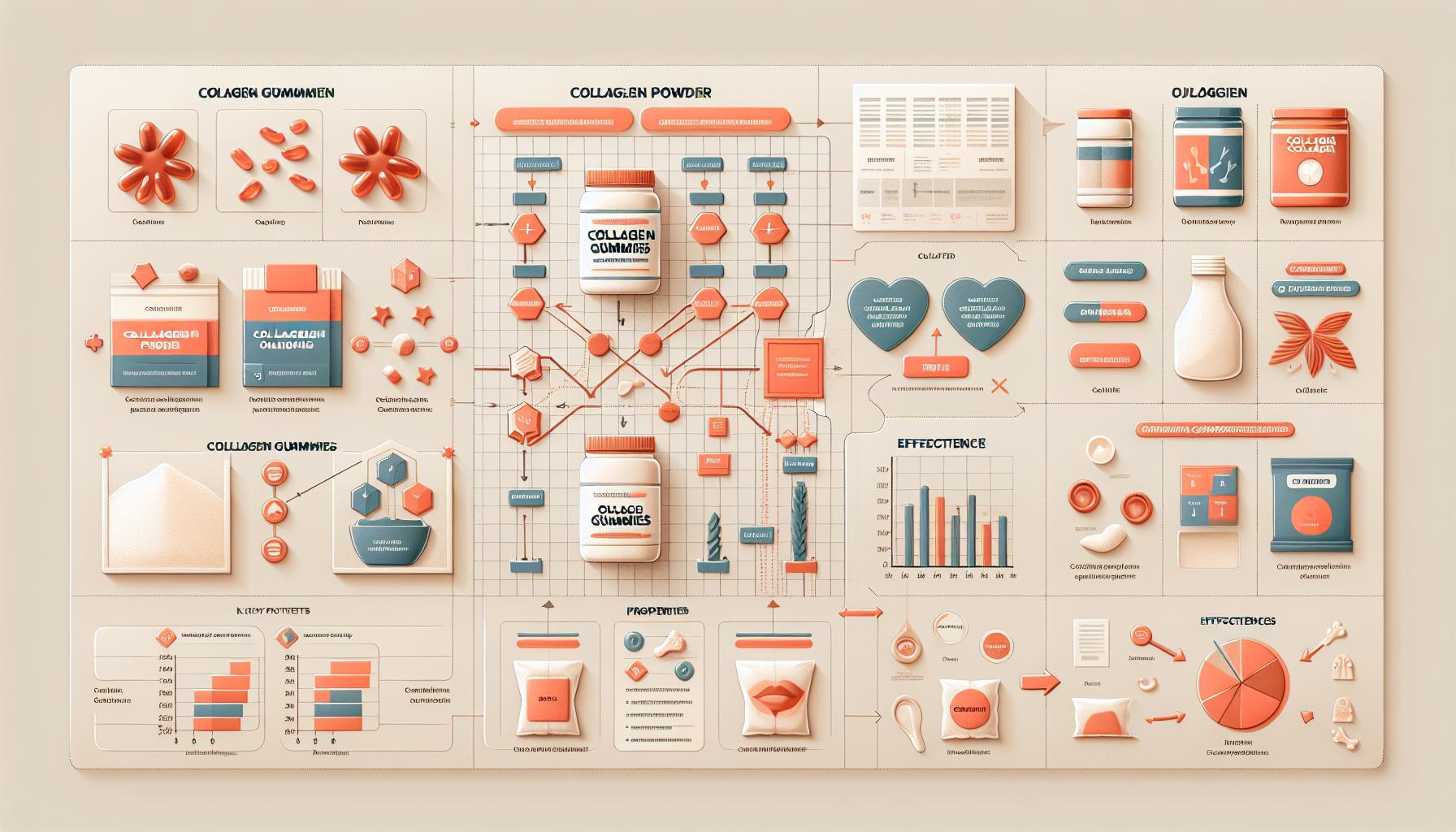
You’re probably seeing collagen gummies popping up everywhere, promising glowing skin and stronger joints. But are these tasty treats as effective as the traditional collagen powder? With so many options on the market, it’s crucial to understand what you’re really getting.
In this text, we’ll jump into the pros and cons of both collagen gummies and powders. We’ll explore their effectiveness, absorption rates, and overall benefits to help you make an well-informed choice. Whether you’re new to collagen supplements or looking to switch things up, we’ve got you covered.
Key Takeaways
- Convenience vs. Dosage: Collagen gummies are easy to consume and portable but generally offer lower collagen content per serving compared to powders, which require mixing but provide higher doses.
- Ingredients and Additives: Gummies often contain sweeteners and flavorings that can impact absorption and add unwanted calories, while powders tend to have minimal additives, making them a purer option.
- Absorption Rates: Collagen powder typically offers better bioavailability due to its higher concentration of hydrolyzed peptides and lack of interfering ingredients like sugars found in gummies.
- Cost Considerations: While collagen gummies are more expensive per serving due to added flavors and convenience factors, powders are a more cost-effective choice for those aiming for higher collagen intake.
- Lifestyle Fit: Gummies are ideal for busy individuals looking for quick supplementation on-the-go, whereas powders suit those who prefer customizable dosages and incorporating supplements into meals or beverages at home.
What Are Collagen Supplements?
Collagen supplements help maintain or boost your body’s collagen levels. Collagen, the most abundant protein in your body, is vital for skin, hair, nails, joints, and bones. As you age, collagen production decreases, leading to wrinkles and joint pain. Supplementing with collagen can counteract these effects.
Types Of Collagen Supplements
Collagen supplements come in several forms:
Collagen Gummies
- Pros: Convenient to consume; portable; often flavored for an enjoyable experience. Pre-measured servings eliminate dosing guesswork.
- Cons: Lower collagen content per serving compared to powders; may contain added sugars and calories; generally more expensive per serving.
Collagen Powders
- Pros: Higher collagen content per serving; versatile—can be mixed into various beverages and foods; typically more cost-effective per serving.
- Cons: Less convenient than gummies; requires mixing and measuring; some people may find the taste unappealing.
For a reliable option of collagen gummies HealthNutrition’s Collagen Gummies offer a tasty way to support your health without compromising on convenience.
Benefits of Collagen
Supplementing with collagen offers multiple benefits:
- Skin Health: Enhances skin elasticity and hydration which reduces wrinkles (Source: National Institutes of Health).
- Joint Pain Relief: Alleviates symptoms of osteoarthritis by improving joint function (Source: PubMed).
- Bone Health: Increases bone mineral density reducing fracture risks as you age (Source: ScienceDirect).
Incorporating collagen into your daily routine via gummies or powders can make a significant difference in maintaining overall health as you age.
Collagen Gummies: Pros and Cons
Collagen gummies have gained popularity as a convenient way to supplement collagen. Let’s examine their ingredients, advantages, and disadvantages.
Ingredients in Collagen Gummies
Collagen gummies often contain hydrolyzed collagen peptides derived from bovine or marine sources. Plus to collagen, these gummies include sweeteners like glucose syrup and sugar, flavorings (e.g., fruit extracts), and gelling agents such as gelatin or pectin. Some products also add vitamins and minerals like Vitamin C to enhance collagen synthesis.
Pros of Collagen Gummies
Convenience: One of the biggest perks is the ease of use. Unlike powders that need mixing, you can consume gummies straight out of the bottle without any preparation.
Taste: Many find them more palatable than other forms of supplementation. The fruity flavors make it feel like you’re eating candy rather than taking a supplement.
Portability: These are easy to carry around. Whether at work or traveling, you can take your daily dose without hassle.
For instance, HealthNutrition’s Collagen Gummies offer convenience and taste while helping maintain skin elasticity and joint health.
Cons of Collagen Gummies
Lower Dosage: Compared to powders, gummies generally provide less collagen per serving—often between 1g to 5g versus up to 20g in powders—impacting effectiveness for those seeking higher doses.
Added Ingredients: Sweeteners and flavorings may interfere with absorption or contribute unwanted calories. This could be an issue if you’re watching your sugar intake or following a specific diet plan.
According to Harvard Health adding unnecessary sugars through supplements can lead to various health issues over time if not managed properly.
Considering both pros and cons helps determine if this form suits your lifestyle better than traditional powders.
Collagen Powder: Pros and Cons
Collagen powder is a popular choice for those looking to boost their collagen intake. It offers several advantages over other forms of supplementation.
Ingredients in Collagen Powder
Typically, collagen powders contain hydrolyzed collagen peptides derived from sources like bovine, marine, or chicken. These peptides are broken down into smaller units for easier absorption. Unlike collagen gummies, powders usually lack sweeteners and flavorings unless explicitly added. This purity makes them an excellent option for individuals seeking maximum collagen per serving without additional ingredients that could interfere with absorption.
Pros of Collagen Powder
- Higher Collagen Content: One of the primary benefits of collagen powder is its high concentration of collagen per serving. You can easily achieve doses ranging from 10 g to 20 g daily without consuming large quantities.
- Customizable Dosage: Powders provide flexibility in dosage customization, allowing you to adjust your intake based on specific needs—whether you’re targeting skin health or joint pain relief.
- Minimal Additives: Most powders come with minimal additives compared to gummies, which often include sweeteners and flavorings that might not align with everyone’s dietary preferences.
- Versatility: You can mix collagen powder into various beverages like smoothies, coffee, or even water without significantly altering the taste or texture.
- Preparation Required: Mixing is necessary before consumption since it comes in powdered form. This extra step might be inconvenient if you prefer ready-to-eat options like HealthNutrition’s Collagen Gummies.
- Taste and Texture: Some people find the taste unappealing even though it’s possible to mask it by mixing it into flavored drinks or foods.
- Portability Issues: Carrying around a container of powder isn’t as convenient as taking along pre-packaged gummies when traveling or during busy days.
For authoritative insights on how different types of protein supplements compare in terms of effectiveness and usage scenarios, consider reading more from reputable sources like WebMD and Harvard Health Publishing.
Comparing Absorption Rates
When comparing collagen gummies to powders, it’s essential to understand their absorption rates. Both forms offer unique benefits that can impact their effectiveness.
Bioavailability of Collagen Gummies
Collagen gummies are convenient and tasty, making them a popular choice for those on the go. But, they typically contain lower collagen content per serving compared to powders. This lower concentration can affect their bioavailability. Added sugars and other ingredients in gummies may interfere with collagen absorption. Even though these factors, the bioavailability of collagen in gummies remains generally good but not as high as that of powders.
For instance, HealthNutrition’s collagen gummies combine hydrolyzed collagen peptides with flavorings and sweeteners, offering a convenient way to boost your intake while ensuring some level of efficacy.
Bioavailability of Collagen Powder
Collagen powder offers a higher concentration of collagen per serving (10 g to 20 g), enhancing its bioavailability. Powders lack the added sugars found in gummies, which means fewer potential barriers to absorption exist. They often contain hydrolyzed collagen peptides from sources like bovine or marine origins.
A notable advantage is the ability to mix powders into various beverages like smoothies or coffee, increasing versatility without sacrificing potency. For more authoritative insights on protein supplements’ comparisons about effectiveness, reputable sources such as WebMD provide detailed analyses on this topic.
Summarizing, while both forms have their merits, understanding their differences in absorption rates helps you make an well-informed choice tailored to your lifestyle and health goals.
Convenience and Usage
When comparing collagen gummies to powder, convenience and usage play a significant role in your decision. Depending on your lifestyle and preferences, one form may be more suitable than the other.
Ease of Use
Collagen gummies are incredibly easy to use. You simply chew them, making them perfect for those who dislike swallowing pills or mixing powders. They don’t need any preparation, saving you time in your daily routine. For instance, HealthNutrition’s collagen gummies offer a tasty and straightforward way to get your daily collagen intake without fuss.
On the other hand, collagen powder requires mixing with a liquid like water or juice. This can be less convenient if you’re always on the go. But, powders allow for customizable dosages and can be added to various recipes, providing versatility that gummies can’t match.
Lifestyle Considerations
Your lifestyle largely determines which form is more convenient for you. If you’re frequently traveling or have a busy schedule, collagen gummies are ideal due to their portability and ease of consumption anywhere, anytime. They also come in flavored options that make taking supplements more enjoyable.
But, if you prefer having control over your supplement dosage or enjoy incorporating supplements into meals and drinks at home, collagen powder might be better suited for you. Although it requires some preparation effort—mixing into smoothies or coffee—the higher concentration per serving could offer more potent benefits.
For detailed information on how different types of protein supplements compare about effectiveness and usage scenarios, consult reputable sources like WebMD or Harvard Health Publishing.
Cost Comparison
Comparing the cost of collagen gummies to powders reveals distinct differences in pricing and value. Both forms offer unique advantages, but understanding their price points helps inform your purchasing decisions.
Price of Collagen Gummies
Collagen gummies typically come at a higher price per serving compared to powders. On average, a bottle containing 60 gummies might cost around $20-$30, with each serving providing less collagen content than its powdered counterpart. For instance, HealthNutrition offers collagen gummies that combine convenience and taste, though you may find them more expensive on a per-serving basis.
Each gummy usually contains between 1-2 grams of collagen, meaning multiple servings are needed daily to match the dosage found in powders. The added ingredients such as sweeteners and flavorings contribute to the higher cost without necessarily enhancing the effectiveness of the supplement. Even though this, many consumers prefer gummies for their easy consumption and enjoyable taste.
Price of Collagen Powder
In contrast, collagen powder tends to be more economical when considering the amount of collagen per serving. A typical container holding 300-400 grams of powder can range from $25-$45, translating to about $0.80-$1.50 per serving (10-20 grams). This makes powders a cost-effective choice for those aiming for higher collagen intake.
Powders have fewer additives compared to gummies; so they often provide purer forms of hydrolyzed collagen peptides derived from sources like bovine or marine origins. Their versatility allows them to be mixed into various beverages or recipes without altering taste significantly.
When shopping for supplements like these, reputable sources such as WebMD highlight the importance of assessing both ingredient quality and cost-effectiveness (source).
Conclusion
Choosing between collagen gummies and powders boils down to your lifestyle preferences and specific health goals. Both forms offer unique advantages, from the convenience and taste of gummies to the higher dosage and versatility of powders. While gummies are great for those on the go, powders provide a more economical option for those seeking higher collagen intake. Consider your daily routine and dietary needs when making your choice, and consult credible sources like WebMD or Harvard Health Publishing for further guidance on protein supplements. Incorporating either form into your routine can significantly enhance your overall well-being as you age.
Frequently Asked Questions
What are collagen gummies?
Collagen gummies are chewable supplements that contain hydrolyzed collagen peptides, often with added sweeteners and flavorings. They offer a convenient and tasty way to boost collagen intake.
How do collagen powders differ from gummies?
Collagen powders contain a higher concentration of hydrolyzed collagen peptides (10-20 grams per serving) and lack the additives found in gummies. They require mixing into liquids but allow for customizable dosages.
Are collagen gummies as effective as powders?
Gummies provide lower doses of collagen compared to powders and may include ingredients that interfere with absorption. Powders generally offer better bioavailability due to higher collagen content and fewer additives.
What are the benefits of taking collagen supplements?
Collagen supplements can improve skin health, reduce joint pain, strengthen nails, enhance hair quality, and support bone health by boosting the body’s declining natural collagen levels.
Why is it important to supplement with collagen as we age?
As we age, our bodies produce less collagen, leading to issues like wrinkles, joint pain, and weaker bones. Supplementing helps maintain these essential structures.
What should I consider when choosing between gummies and powders?
Consider convenience vs. dosage: Gummies are portable and easy to consume but offer lower doses; powders provide higher doses but require preparation. Your lifestyle preferences will guide your choice.
Are there any downsides to using collagen gummies?
Yes, they typically have lower dosages of collagen per serving compared to powders and may include extra sugars or calories that could affect absorption or overall diet.
Is one form more cost-effective than the other?
Collagen powders tend to be more economical on a per-serving basis compared to gummies because they offer higher concentrations of collagen at a similar price point.
Can I mix my own dosages with both forms of supplements?
You can customize dosages easily with powder by adjusting how much you mix into drinks or foods. Gummies come pre-dosed which limits flexibility in adjusting intake amounts.
Should I consult an expert before starting supplementation?
Yes, it’s advisable to consult reputable sources like WebMD or Harvard Health Publishing for guidance on protein supplements or speak with healthcare professionals for personalized advice.